Is becoming a domain name registrar & what it means for the business — Why Google
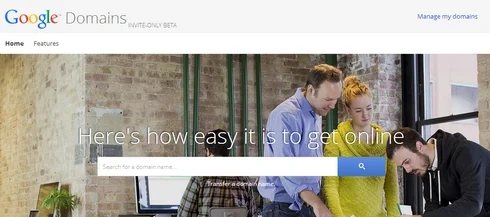
Google is becoming a public domain name registrar. Here’s why.
A few months ago a prominent figure in the domain name industry told me a prediction: in a short time, GoDaddy will no longer be the top domain name registrar. It will be Google.
That was quite a bold prediction given that, at the time, Google didn’t even offer domain name registrations to the public. It only referred people to other registrars.
Yesterday Google disclosed that it’s moving into the retail registrar market with Google Domains.
(This may well be the reason Google recently registered a bunch of Donuts fresh TLDs, counting those still in sunrise, as domaintest.TLD.)
First, let’s rewind a little bit.
Google originally became an ICANN-accredited domain name registrar with little intention of offering domain names to the public. Instead, it wanted to use domain name data to improve its search algorithms.
The goal was to cut down on search spam and get a more direct connection to expired domains so it could understand when they changed hands.
Following becoming accredited it started offering domain names on its website, but this was done through partners counting GoDaddy and eNom.
Now, in 2014, the firm is going to sell domains directly to the public.
There are a couple obvious reasons for this.
First, the firm has a vested interest in getting as many businesses online as possible. It gets them hooked into its many products counting Google Apps, Gmail, Google Pages, etc. Then it can sell them Google Adwords.
It was sort of achieving this through a domain reseller model.
Which leads to the second key reason: fresh top level domain names.
Google is one of the largest applicants for fresh top level domain names, hoping to soon offer .blog, .app and .lol domains to the public.
Although it is by now working with other domain name registrars for distribution of these TLDs, having its own massive distribution channel will allow it to more easily promote its own TLDs to the public.
Does a pet sitter in Mobile, Alabama want to get online? Come to Google Domains, get a .pet domain, click a button and you’ll have email and a website.
(Google is smartly partnering with the likes of Wix instead of getting into the support-intensive business of webhosting.)
This will greatly simplify the current process of getting online. Google’s main motive isn’t a bit of margin on the domains. It’s getting another business online.
Do you think .com will show up at the top of Google’s domain results for long? I doubt it.
So what does this really mean for the likes of GoDaddy? It depends.
It depends greatly on Google’s level of motivation. Let’s face it, Google doesn’t always execute or throw its weight behind fresh ventures. Countless times, Google has launched a service and pundits have stated it’s an “enter-firm-name-here killer”, only to itself kill the product a few years later.
Also keep in mind that Google’s target market isn’t domainers. It’s businesses that actually want to create a web presence. Other registrars will continue to hold on to the domain investor’s business. Granted, domain investors aren’t GoDaddy’s target market, either.
Depending on its long run plans and predictions, Google will also rely on other registrars to distribute its own TLDs, too.
For now.
I think the biggest beneficiary to Google’s entrance are other fresh TLD registries. If Google is truly able to shake up the market, I see some of the entrench registrar market leaders playing a bit nicer with registries. I also foresee Google treading carefully when it comes to offering exclusively its own TLDs, lest it grab the attention of regulators.
Indeed, Google’s entrance into the registrar market might be the best thing yet to happen to fresh TLDs. Awareness is surely regarding to grow.