
The Psychology Behind Domain Pricing: Are You Leaving Money on the Table?
In the dynamic world of domain investing and sales, pricing your inventory correctly is paramount. While many conventional wisdoms guide sellers, new research suggests a counterintuitive approach could significantly boost your success. Imagine increasing a domain’s price slightly, only to find it appears less expensive and more appealing to potential buyers. This article delves into a fascinating pricing strategy that challenges traditional beliefs, encouraging domain sellers to rethink how they present their assets to the market.
Walk through any domain aftermarket, and you’ll encounter a variety of pricing conventions. Common practices include rounding prices to the nearest thousand, such as $3,000, or employing “charm pricing” by dropping a dollar, resulting in figures like $2,999. Historically, popular platforms like BuyDomains have even popularized distinct endings, often using “88,” leading to prices like $2,888. These strategies are rooted in long-held beliefs about consumer psychology – namely, that prices ending in 9s convey a discount, and round numbers signify prestige or simplicity.
However, recent academic research suggests that these established norms might not always be the most effective. For domain investors operating in a competitive landscape, understanding these subtle shifts in consumer perception could unlock new opportunities for optimizing sales and maximizing returns.
Unconventional Wisdom: The Rise of “1-Endings” in Pricing
The core of this intriguing new perspective comes from research published in The Journal of Retailing and Consumer Services. In their paper, “Are 1-endings the new 9-endings? An alternative for generating price discount perceptions,” researchers explore a phenomenon that could redefine how we approach psychological pricing, especially for higher-value items like premium domain names.
The study posits that for multi-digit prices, particularly those in the four-figure range and above—the sweet spot for many quality domain names—prices ending in repeating low digits, specifically “1s,” can be perceived as more of a discount than traditional “9-endings.” This groundbreaking insight challenges decades of marketing dogma and opens a new avenue for domain sellers looking to gain an edge.
Diving Deep into the Research: *Are 1-Endings the New 9-Endings?*
The comprehensive study involved five distinct experiments designed to rigorously test consumer reactions to various price endings. The findings were consistent and compelling: consumers consistently perceived multi-digit prices with “1-endings” (e.g., $2,111) as offering a greater discount compared to prices ending in “9s” (e.g., $1,999). Furthermore, the research indicated that advertisements featuring these repeating low-digit prices were more likely to attract clicks, signaling increased consumer interest and engagement.
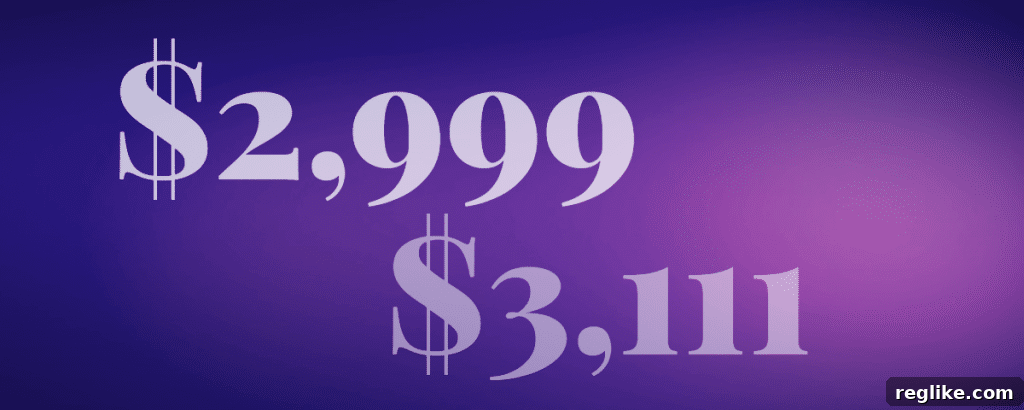
This implies a direct and actionable takeaway for domain sellers: you might achieve greater success selling a domain priced at $3,111 than if you listed it at $2,999, despite the latter being numerically lower. This counterintuitive finding urges a reconsideration of established pricing models within the domain aftermarket.
As marketing expert Thomas McKinlay aptly explained in his newsletter, the ramifications of this research are significant. While the study didn’t directly compare “x,111” prices to perfectly round numbers like $3,000, it strongly suggests that adopting a pricing structure with repeating low digits in the final three positions could make your domains appear more affordably priced than traditional “999” endings, even when the absolute price is slightly higher.
Why Do “1-Endings” Work? Unpacking Consumer Perception
Understanding the psychological underpinnings of why “1-endings” might be more effective than “9-endings” is crucial for appreciating this strategy’s potential. Several factors contribute to this phenomenon:
- Discount Signal Fatigue: For decades, prices ending in “9” have been ubiquitous in retail, signaling a discount. While effective initially, this strategy has become so commonplace that consumers may now be desensitized to it, or worse, perceive it as a transparent marketing ploy rather than a genuine bargain. The “9-ending” might now trigger a sense of skepticism or suggest a ‘cheap’ rather than ‘discounted’ product.
- Perceived Precision and Rarity: A price like $3,111 feels more precise and less arbitrary than $2,999 or even $3,000. This precision can imply that the seller has carefully calculated the value, making the discount (or the price itself) seem more genuine and less manipulated. The rarity of such endings in traditional pricing might also make them stand out and capture attention.
- Anchoring Effect and Cognitive Processing: While traditional charm pricing relies on the left-digit effect (our brains quickly process the leftmost digit, making $1.99 seem like $1), the “1-ending” strategy might leverage a different cognitive bias. When a price like $2,111 is presented, the initial “2” anchors the value. The subsequent “111” might be subconsciously processed as a unique, non-standard adjustment, suggesting a special price rather than a standardized markdown.
- Avoidance of “Manipulative” Feel: Consumers are increasingly sophisticated. A price like $2,999, while numerically lower, might subconsciously feel like a classic sales tactic. A price like $2,111, conversely, might bypass this ‘sales trick’ radar, leading to a more positive, less guarded perception of the offer.
These psychological nuances suggest that the perceived value of a domain isn’t solely determined by its numerical cost, but by the subtle cues embedded within its price tag.
Applying This to the Domain Aftermarket
The relevance of this research to domain investors is particularly strong because the study focuses on items priced at four figures or more. This aligns perfectly with the typical pricing for quality, brandable, or premium domain names in the aftermarket. Whether you’re selling an exact match domain, a short and memorable brandable, or a niche-specific premium domain, your pricing strategy can significantly influence its appeal.
Consider the potential impact on various domain types:
- Premium Brandables: For domains aiming for a sophisticated, unique appeal, a precise “1-ending” price might resonate better than a traditional “9-ending,” subtly reinforcing the domain’s unique value.
- Exact Match Domains: These domains often carry inherent value based on search volume or industry relevance. A nuanced pricing approach could highlight that value without resorting to overly common sales tactics.
- High-Value Assets: As domain prices move into the mid-to-high four figures and beyond, perceived precision becomes even more important. A price like $10,111 might be seen as a more considered offer than $9,999 or $10,000, especially to discerning buyers.
For domain investors and sellers, this means evaluating your inventory not just on its inherent worth, but on how its price is visually and psychologically communicated to potential buyers. Testing this strategy could lead to improved conversion rates, faster sales cycles, and even higher selling prices for specific assets.
Beyond 9-Endings: A Look at Other Domain Pricing Strategies
While the “1-ending” strategy presents an exciting new frontier, it’s essential to understand it within the broader context of domain pricing. Traditional methods still hold sway in certain situations:
- Round Number Pricing (e.g., $3,000, $5,000): This approach conveys simplicity, professionalism, and often a sense of premium value. Round numbers are easy to remember and communicate, and they can project an image of confidence and non-negotiable value. It’s often suitable for highly desirable, high-value domains where the seller wants to avoid any perception of discounting.
- Charm Pricing (e.g., $2,999, $4,995): The classic strategy, designed to make a price appear lower by focusing on the leftmost digit. While the new research challenges its efficacy for multi-digit prices, it remains a common practice, particularly for lower-value domains or when aiming for a quick, high-volume sale. Its effectiveness may vary by market and target audience.
- “88” Endings (e.g., $2,888): Popularized by platforms like BuyDomains, these unique endings can create a distinct brand association and may appeal to certain buyer segments. They fall into a category of memorable, non-standard endings that differentiate a price from the typical “99” or round number.
- Value-Based Pricing: This strategy focuses on the perceived value the domain will bring to the end-user (e.g., potential revenue, branding power, SEO benefits) rather than just market comparisons or acquisition costs. While not about the ending digits, it’s a fundamental approach that should underpin any specific pricing tactic.
The “1-ending” strategy doesn’t necessarily replace these methods entirely but offers a powerful alternative or complement, especially for specific price points and domain types. The key is strategic application based on research and experimentation.
Implementing the “1-Ending” Strategy: Practical Steps for Domain Sellers
Inspired by this research, I am personally going to try this pricing approach for relevant domains in my portfolio. For domain investors with larger portfolios, this presents a unique opportunity for large-scale experimentation. Here’s how you can approach implementing this strategy:
- Review Your Portfolio: Identify domains that fall into the four-figure pricing range and above. These are the prime candidates for testing the “1-ending” strategy.
- Experiment Strategically: Don’t change all your prices overnight. Select a subset of similar domains or use this strategy for new listings. For instance, if you have several comparable domains typically priced at $2,999 or $3,000, try listing some at $3,111.
- Track and Analyze Results: This is critical. Monitor key metrics such as:
- Number of inquiries or offers received.
- Conversion rates (sales generated).
- Time to sale.
- Click-through rates on listings (if your platform provides this data).
Compare these metrics for domains priced with “1-endings” versus your traditional “9-endings” or round number pricing.
- Consider A/B Testing: If you have a substantial portfolio and the means to do so, A/B testing different price endings for similar domains can provide robust data on what works best for your specific niche and audience.
- Maintain Consistency (Initially): While experimenting, try to keep other variables consistent (e.g., listing descriptions, marketing efforts) to isolate the impact of the pricing strategy.
- Share Your Findings: The domain investing community thrives on shared knowledge. Contributing your results, whether positive or negative, helps refine best practices for everyone.
Remember, the domain market is not monolithic. What works for one type of domain or buyer might not work for another. Continuous testing and adaptation are key to sustained success.
The Future of Domain Pricing: Experimentation and Adaptation
The domain aftermarket is a perpetually evolving ecosystem, influenced by technological advancements, market trends, and, crucially, shifts in consumer psychology. The research on “1-endings” serves as a powerful reminder that what was once considered immutable in pricing strategy can be overturned by new insights. To remain competitive and maximize profitability, domain investors must embrace a mindset of continuous learning and experimentation.
Staying updated on consumer behavior research, economic trends, and psychological studies can provide invaluable tools for optimizing your sales approach. The courage to challenge established norms and test unconventional strategies is often what separates the most successful sellers from the rest.
Conclusion: A Call to Action for Domain Investors
The traditional approach to domain pricing, often reliant on charm pricing or simple rounding, may no longer be the most effective strategy for today’s discerning buyers. The compelling research on “1-endings” presents a scientifically backed alternative that could subtly but significantly alter consumer perception, making your domain listings appear more discounted and desirable.
Don’t be afraid to experiment. Take this opportunity to review your current pricing strategies and consider integrating “1-endings” for a portion of your portfolio. The potential to increase sales, enhance perceived value, and stand out in a crowded marketplace is too significant to ignore. Let’s collectively explore this new frontier in domain pricing and share our findings to foster a more informed and prosperous domain community.